

FROM LOCAL TO GLOBAL: HOW AFRICAN PRODUCTS WIN INTERNATIONAL BUYERS

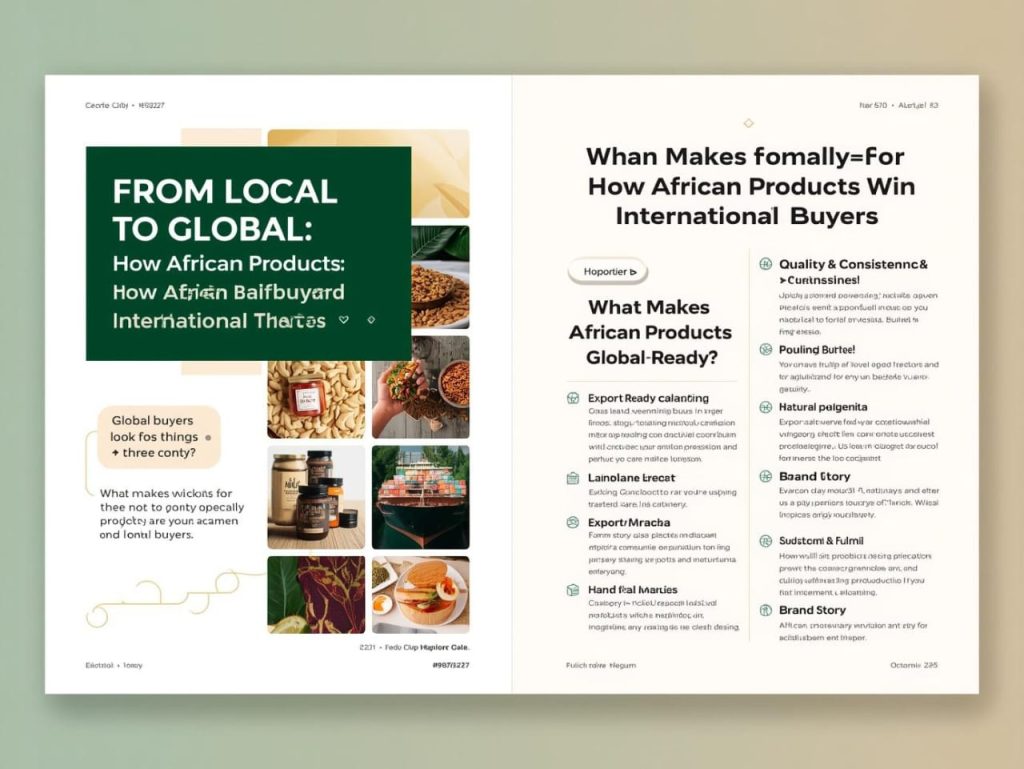
African products are increasingly gaining attention in global markets. From specialty agricultural goods to natural beauty products, textiles, crafts, and processed foods, buyers across North America, Europe, and the Middle East are actively looking for authentic, high-quality products from the continent. However, turning a locally produced item into a globally competitive product requires more than just demand—it requires structure, standards, and strategy.
- Quality and Consistency Come First
International buyers prioritize reliability. A product that meets global standards in taste, safety, durability, or performance is far more likely to succeed abroad. This means maintaining consistent quality across production batches, using proper processing techniques, and ensuring that packaging protects the product during long-distance shipping.
- Export-Ready Packaging Matters
Packaging is often the first thing international buyers see. Clear labeling, professional design, and compliance with global packaging standards make a significant difference. Information such as ingredient lists, origin details, certifications, and expiration dates builds confidence for distributors and retailers.
- Compliance and Documentation
Export success also depends on meeting regulatory requirements. Proper export documentation, certifications, and adherence to food safety or product standards help prevent delays at ports and build trust with international partners. Businesses that invest time in understanding these requirements position themselves for smoother entry into global markets.
- Logistics and Fulfillment Infrastructure
Reliable logistics play a critical role in scaling exports. Efficient shipping, proper storage, and fulfillment networks help businesses deliver products quickly and safely to buyers. Export platforms and fulfillment centers are increasingly helping African SMEs manage this complexity by connecting producers with international distribution systems.
- Story and Brand Identity
Global consumers are drawn not only to the product itself but also to the story behind it. African brands that highlight their cultural roots, ethical sourcing, and community impact often stand out in competitive markets. Authentic storytelling can transform a product from a simple commodity into a brand that resonates with buyers.
- Leveraging Digital Trade Platforms
Technology has made global trade more accessible than ever. Digital marketplaces and export platforms allow African producers to showcase their products to buyers worldwide while accessing logistics, compliance guidance, and market insights.
The journey from local production to global shelves is not accidental. It requires preparation, standards, and the right ecosystem of support. As more African entrepreneurs build export-ready businesses, the continent’s products are gaining the recognition they deserve, competing not just on authenticity, but on quality, reliability, and global appeal.